











































































Kenya’s young people are at the centre of the country’s civic life. In the Finance Bill 2025 protests, Gen Z turned digital platforms into spaces for activism, dialogue and public accountability. Young people organised, debated and held public institutions to account, and the country took notice. The protests marked a generational shift: young people were making clear that they are active participants in policy, and not bystanders to it.
But protest is only one form of participation, and the day-to-day work of governance happens in places young people are less often present. Public budgets are set at county level. Voter registers are built months before an election. Youth funds are managed through processes few young people can see into. In Kisumu County, young people described the same obstacles: low voter registration and turnout, limited access to county budget information, and weak youth representation in governance spaces. Panelists later added a lack of transparency in county processes, over-bureaucratised youth funds and weak coordination between county and national youth structures, all of which feed a rising sense of political apathy.
The result is a gap between young people’s energy and their influence. Moving from voice to impact takes civic knowledge, practical tools and structures that last beyond any single moment.
The intervention: the UNJP on civic engagement
The Youth Voices in Action Forum was delivered under the United Nations Joint Programme (UNJP) on civic engagement. The programme’s premise is that young people should have the facts, platforms and spaces to take part in governance at every level, between elections as well as during them. Within this approach, the Kisumu forum brought the programme’s aims to a county where young people had already shown how much they wanted to engage.
The solution: Youth Voices in Action Forum
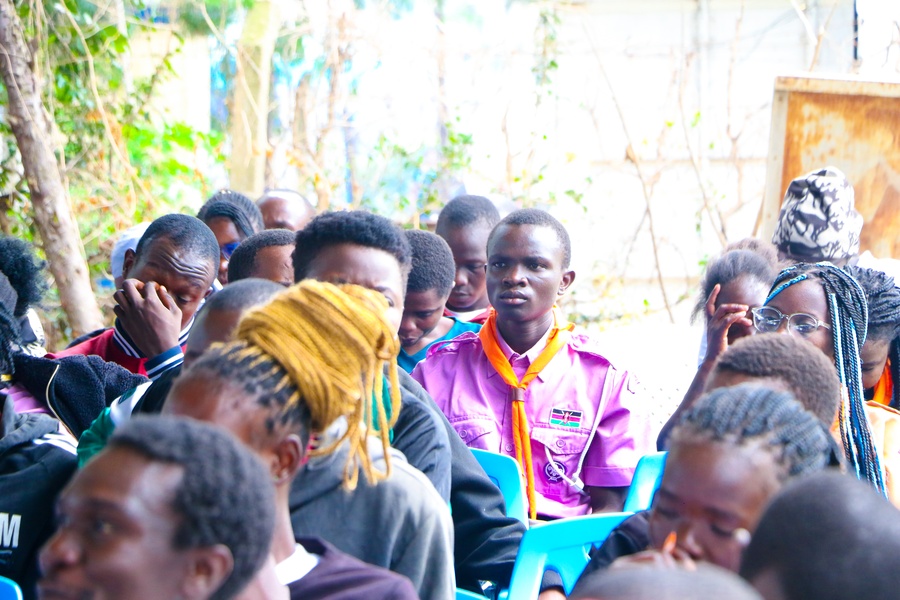
More than 150 young people from across Kisumu County gathered at RIAT with one question: how can the energy of the protests become structured, informed and lasting engagement with governance? The forum had four objectives. It aimed to equip young people with civic knowledge and digital tools, introduce Yunitok and Yoma as platforms for accountability, participation and empowerment, create space for young people to develop their own solutions, and strengthen partnerships between youth, government and civil society.
Speakers stressed that participation must go beyond demonstrations and include a working grasp of public finance, electoral processes and policy oversight. Cynthia Oduor, Youth Engagement Lead at STEM Impact Center, told participants: “Every Finance Bill debate affects your pocket, your tuition, your hustle. Our responsibility is to equip you with facts and platforms that make your voice credible, not just audible.”
Participants were shown how Yunitok, Kenya’s U-Report platform, lets young people engage on governance, social justice and public accountability. Its polls, chatbots, civic campaigns and real-time feedback channels collect youth views and pass them to government actors and development partners. They were also introduced to Yoma, a digital ecosystem that awards digital credentials for civic participation, including completed courses, volunteer work and innovation challenges.
For Brian Omondi, a RIAT student, this answered a real need: “We want to register to vote, but we also want to vote with understanding. Platforms like Yunitok help decode complex policies, like why taxes matter or how county budgets are made.”
A panel titled Barriers, Governance and Pathways Forward, moderated by a Yunitoker, gave young people a chance to speak candidly about what they meet when they engage with government. Kevin Odhiambo, a Yunitoker from Kisumu, said the answer was preparation: “We protest because we care. But we must convert that care into civic muscle: participate in budget hearings, understand legislation, and occupy civic spaces with informed confidence.”
By the close of the forum, the conversation had moved from what is wrong to what young people will do about it. Participants adopted The Gen Z Social Contract, a joint commitment to sustained civic engagement based on responsibility, knowledge and collective action.
- Mentor peers in budget literacy, policy tracking and peaceful advocacy
Tracy Anyango, a youth leader from Kisumu, put it this way at the close: “We don’t just want a seat at the table. We’re building our own.”
The forum shows what young people can do when they are given facts, tools and room to lead. Their frustration was already there, and the forum helped them turn it into commitments they can act on. The pledges also give partners something concrete to back: a youth-led civic hub, regular accountability dialogues and peers trained in budget literacy.